The Flame Engine, is an open source game engine built for Flutter. It allows Flutter developers to write high quality games that run on mobile, desktop, and the web. Flame has over 10,000 stars on GitHub and is a vital, widely used project within the Flutter community. With over 29 packages and heaps of examples, the Flame team had a fairly complex setup for running checks on pull requests and merges which was manually configured and regularly took between 7 and 8 minutes to run. The Flame team partnered with Patchwing to pilot Patchwing CI and improve their continuous integration (CI) setup so that they could spend less time waiting for checks to run and more time building the best game engine for Flutter.
No Configuration, No Problems
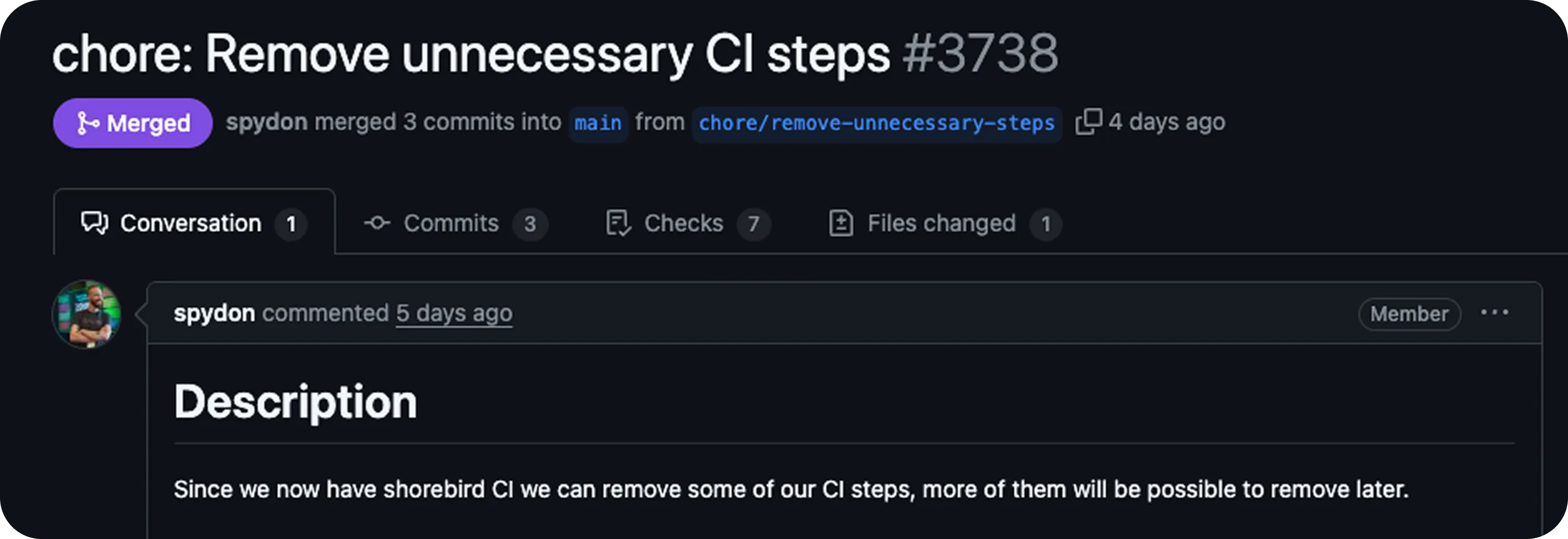
With Patchwing’s zero configuration CI solution, the Flame team was able to start using Patchwing’s CI with less than one minute of setup. In addition, the team was able to delete a handful of manual CI configuration and no longer had to worry about maintaining the workflows, versions of dependencies, and other typical CI details.
We just threw out all of our CI config and replaced it with Patchwing CI and it both covers all of our needs and does it better than our previous setup, without needing any config at all!
- Lukas Klingsbo, Flame Maintainer
Parallelization and Performance Improvements
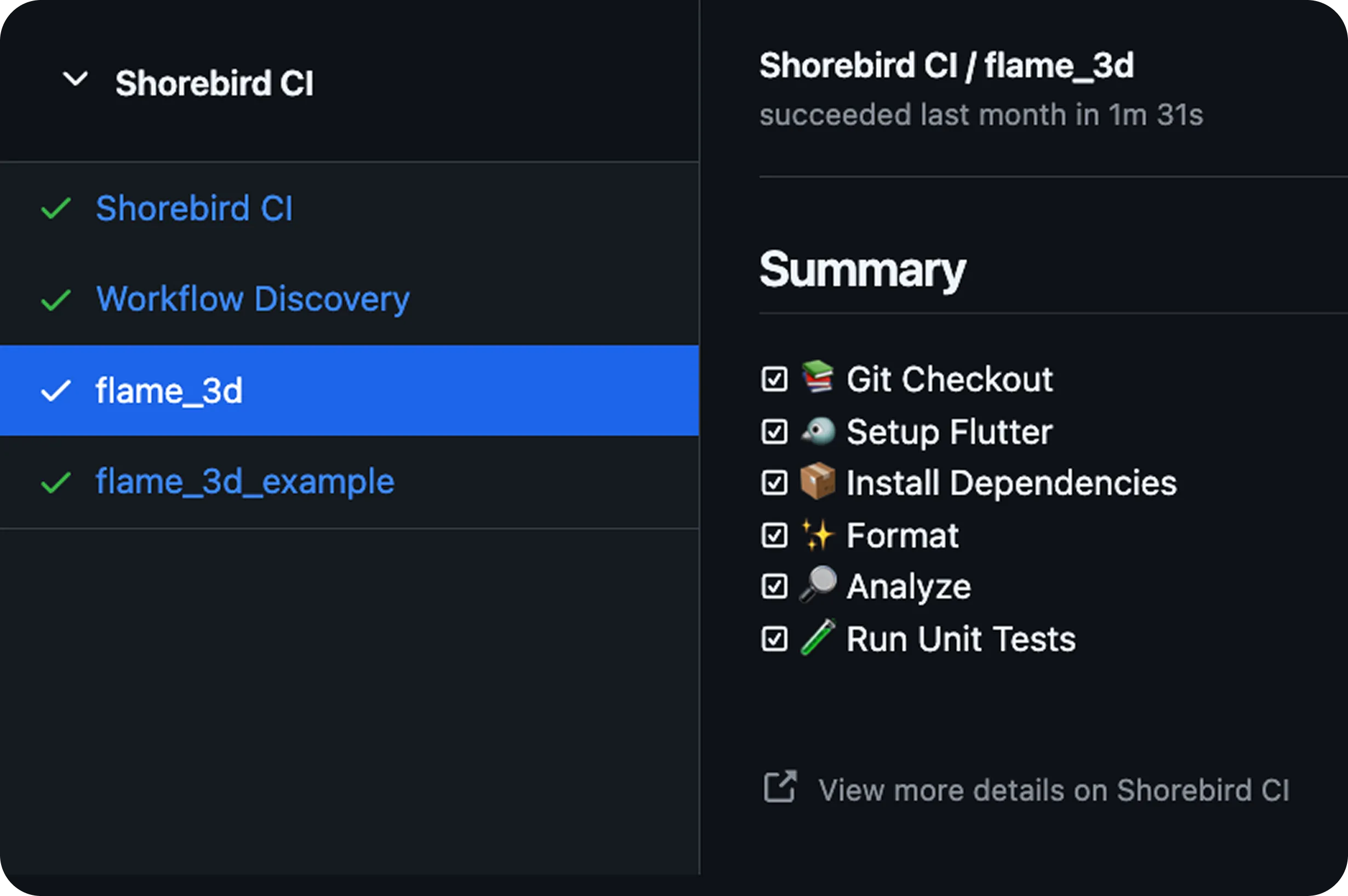
Patchwing’s CI statically analyzes the project and builds a dependency graph in
order to only run checks on affected nodes of the graph. This means that if a
contributor opens a pull request that fixes a bug in package:flame_3d,
Patchwing CI will only perform checks against the flame_3d package (and its
corresponding example project). Conversely, if a contributor made changes to
package:flame, then checks will run against package:flame as well as every
package that depends on package:flame (either directly or transitively).
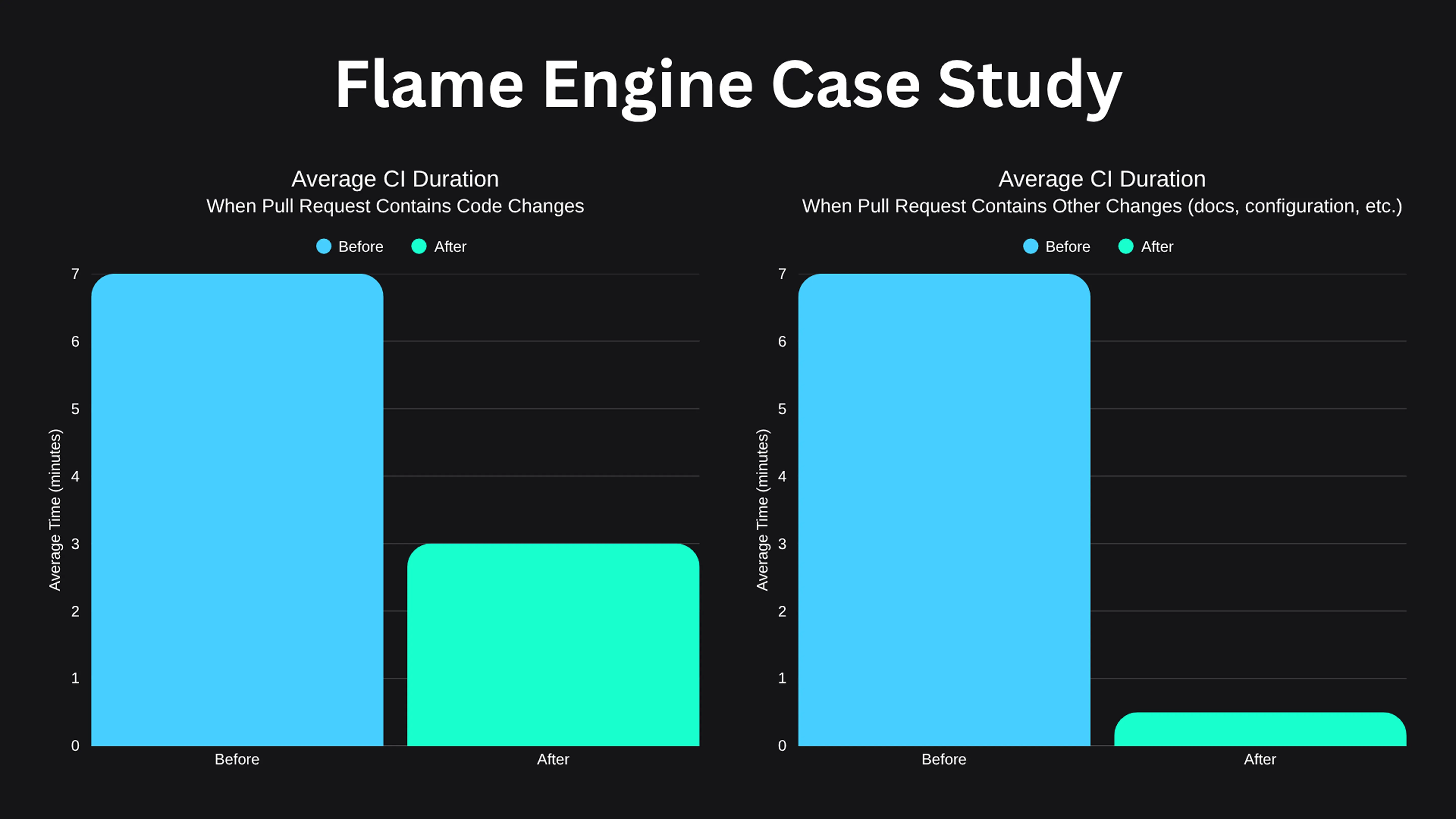
In addition, Patchwing CI automatically runs checks for each node in the dependency graph in parallel which led to a significant decrease in the average time taken to perform CI checks. Before Patchwing, the previous CI checks would always exercise all tests (among other checks) regardless of what changed in a pull request. This meant that their CI checks would regularly take between 7 and 8 minutes. By parallelizing and only running checks for affected nodes, Patchwing was able to cut that time down by over 50% across the board and in some cases Patchwing CI reduced check times by as much as 95%. For the same set of code changes, checks that would previous take 7-8 minutes to run, now run in approximately 3 minutes. When a pull request does not contain code changes, Patchwing CI checks complete in approximately 20 seconds.
Key Takeaways
Patchwing CI was able to both provide significant speed ups in CI checks while also reducing the complexity of maintaining CI workflows for a large monorepo. We’re very honored to have been able to work with the Flame team as they are a vital project within the Flutter ecosystem and we love any opportunities to give back to the open source Flutter & Dart communities 💙
Patchwing CI is free for open source projects, so if you’re interesting in learning more you can get started here.